

Introduction:
Engineering education plays a pivotal role in shaping the next generation of professionals who will tackle the complex challenges of tomorrow. At Amrapali University, the Top 10 B.Tech Colleges in Uttarakhand, it provides students with the knowledge, skills, and mindset necessary to innovate, design, and implement solutions to real-world problems. This article explores how a high-quality engineering education equips students with the essential skills to thrive in the dynamic and ever-evolving world of engineering
About Us:
At Amrapali University, engineering education is designed to prepare students for real-world challenges by fostering critical thinking, analytical skills, and technical expertise. The comprehensive curriculum integrates both classroom learning and practical experience through internships, projects, and industry exposure. Students are trained to address complex engineering problems and innovate solutions, empowering them to thrive in dynamic, multidisciplinary environments.
1. Strong Foundation in Core Engineering Principles
The core of engineering education lies in imparting a deep understanding of fundamental principles such as mathematics, physics, chemistry, and computer science. Students are taught the essential theories and concepts that form the building blocks of all engineering disciplines. Whether pursuing mechanical, electrical, civil, or computer engineering, students develop expertise in their respective fields. This foundation enables them to solve complex engineering problems and ensures they have the technical knowledge needed to thrive in any professional environment.
2. Practical Problem-Solving Skills
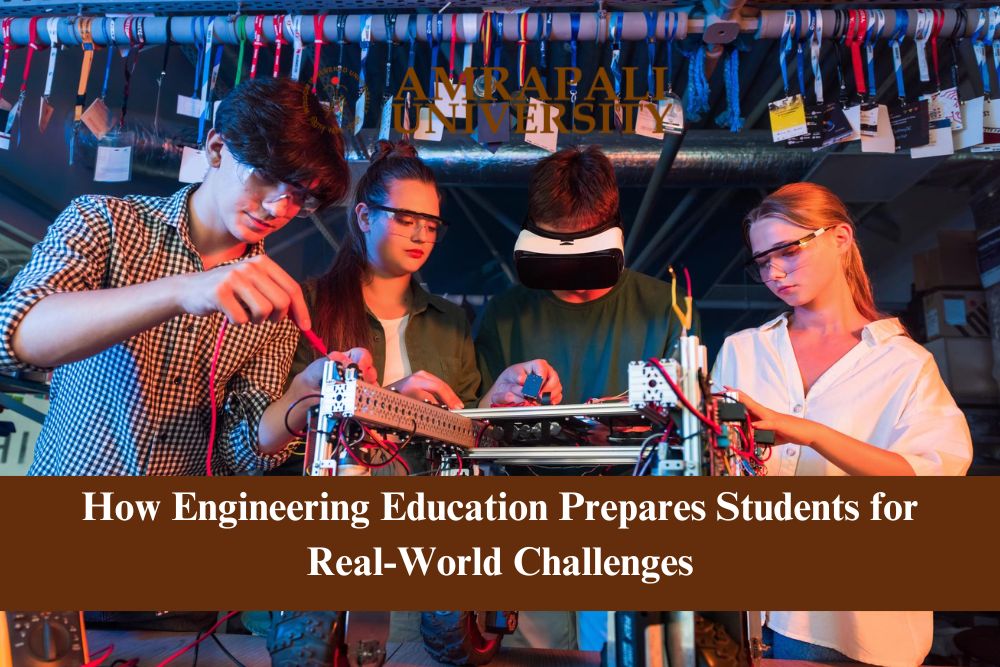
Engineering education is not just about theoretical learning—it’s also about applying that knowledge in real-world scenarios. Through hands-on projects, laboratory work, and internships, students gain practical experience that prepares them for challenges they will face in the workforce. For instance, students may work on designing a new product, conducting experiments, or solving engineering challenges related to sustainability, safety, or efficiency. These activities foster problem-solving skills that are essential for navigating the complexities of real-world issues. By learning to think critically and analytically, engineering students become adept at identifying problems, developing solutions, and implementing them effectively.
3. Innovation and Creativity
Engineering students are constantly encouraged to innovate and think creatively. This is achieved through design projects, research opportunities, and exposure to cutting-edge technology. Engineering education challenges students to find new ways to solve problems and improve existing systems. Students develop the ability to look at a problem from different angles, test different solutions, and continuously improve their designs. This creative problem-solving ability is highly valued in industries such as technology, manufacturing, and construction, where innovation drives growth and competitive advantage.
4. Exposure to Modern Technologies and Tools
One of the key advantages of a high-quality engineering education is exposure to the latest technologies and tools used in the industry. Students are trained in state-of-the-art software, equipment, and techniques that are directly applicable to real-world engineering problems. From computer-aided design (CAD) software to simulation tools, students learn to use industry-standard tools that prepare them for careers in high-tech sectors. This hands-on experience ensures that graduates are job-ready and capable of handling the technological demands of modern engineering roles.
Conclusion:
Engineering education equips students with a diverse range of skills that are essential for solving real-world challenges. By combining theoretical knowledge with practical application, students gain technical proficiency, problem-solving skills, creativity, and the ability to communicate and collaborate effectively. Through exposure to modern tools, industry experience, and ethical practices, engineering students are prepared to contribute meaningfully to society and thrive in their professional careers. The comprehensive training provided by top engineering institutions ensures that graduates are ready to face the complex and ever-changing demands of the engineering world.
FAQs:
Q. 1 How does engineering education equip students for industry challenges?
Ans : Students are trained in both theoretical knowledge and practical skills, preparing them to tackle complex real-world problems in their engineering fields.
Q. 2 What are the key skills gained during engineering education?
Ans : Students develop problem-solving, analytical thinking, project management, and communication skills essential for a successful engineering career.
Q. 3 How do engineering programs incorporate industry exposure?
Ans : Many institutions offer internships, research opportunities, and industry collaborations, providing real-world experience.
Q. 4 Why is innovation important in engineering education?
Ans : Innovation encourages students to create solutions, push technological boundaries, and contribute to global advancements.
Q. 5 Can engineering graduates work in global industries?
Ans : Yes, a strong engineering education equips graduates to work globally, as they gain knowledge applicable across industries worldwide.
Q. 6 Which engineering colleges offer the best career opportunities?
Ans : The top B.Tech colleges in Uttarakhand, including Amrapali University, offer excellent placement opportunities and industry ties.